Scotland's rugged landscapes are defined by its castles, each a testament to the evolution of Scottish castle architecture history. From the stark Norman keeps imposed by early kings to the ornate Victorian towers that romanticised the nation's past, these structures chronicle centuries of conflict, innovation and cultural revival. This journey through stone and mortar reveals how fortifications adapted to threats, technology and taste, shaping the iconic skyline we admire today.
The Norman Foundations: Mottes and Early Stone Keeps
The story of Scottish castles begins in the 12th century under King David I, who initiated widespread construction to consolidate royal authority and introduce Norman influences. These early fortifications were predominantly motte-and-bailey designs: an artificial mound (motte) topped with a wooden keep, surrounded by a bailey enclosure for livestock and retainers, all encircled by a ditch and palisade. Wood was the material of choice for speed, though many succumbed to fire or rot.[1][2]
David I's Normanisation
David I's 'Normanisation' programme saw immigrant nobles and emulating Scottish lords erect these structures across the land. Royal castles emerged as governance hubs, such as those at Ayr and Berwick by 1200. Edinburgh Castle's remnants include St Margaret's Chapel, a rare survivor from this era, hinting at the stone tower-keeps that began replacing wood.[2]
By the late 12th century, stone construction gained traction. Alexander II and Alexander III advanced this with 'modern' castles, but Edward I's 1296 invasion and the Wars of Independence halted progress. Robert the Bruce countered by slighting his own fortresses—like Ayr, Dumfries, Roxburgh and Edinburgh—to deny them to the English.[1]
The Golden Age: 13th-Century Curtain Walls and Towers
The 1200s marked the 'golden age' of castle building in Scotland, shifting from mottes to more ambitious stone designs. Curtain-walled castles appeared around 1200, featuring massive outer walls enclosing internal buildings. Norse-influenced examples like Castle Sween, Castle Tioram and Rothesay Castle pioneered this style in peripheral regions.[2]
Innovation Against Siege
A Norse raid breaching Rothesay's walls in 1230 prompted circular towers projecting from curtains, enhancing flank defence. English 'peels' at Lochmaben, Linlithgow and Selkirk were hasty earth-and-timber builds, later replaced by stone. Mottes persisted for their quick erection amid ongoing threats.[2]
Post-Independence, grander 'livery and maintenance' castles housed retained troops, such as Tantallon in Lothian and Doune near Stirling, rebuilt for Robert Stewart, Duke of Albany, in the 14th century. Tower houses proliferated: tall, rectangular keeps like Cardoness, Crichton, Orchardton, Smailholm and the imposing Borthwick Castle, often with ancillary halls, kitchens and defensive barmkins.[1][2]
Explore these enduring strongholds further on our castles page, where detailed profiles await.
Artillery and Trace Italienne: 15th-16th Century Adaptations
The 15th century introduced gunpowder, demanding radical redesigns. Ravenscraig Castle near Kirkcaldy, started around 1460, claims the title of Britain's first artillery fort. Its D-shaped bastions resisted cannon fire, mounting guns atop, with 'letter box' gun-ports—a continental feature that proliferated in Scotland.[1]
James IV and V's Royal Palaces
Under James III, IV and V, royal palaces fused defence with luxury. James IV built Stirling Castle's King's Old Building (1496) and Great Hall (c.1503); James V added the Royal Palace (c.1540). Linlithgow Palace exemplifies Renaissance restructuring of older castles into palace-like forms.[1][5]
Craignethan Castle (1532) epitomised the era: a tower house with a 16ft-thick artillery wall. Edinburgh Castle's eastern end adopted trace italienne bastions by the 1540s, while English invaders of 1547 built similar at Eyemouth and Haddington. Dunnottar Castle's 15th-16th century fortifications braced against English incursions.[2][7]
Tower Houses and the Lairds' Strongholds
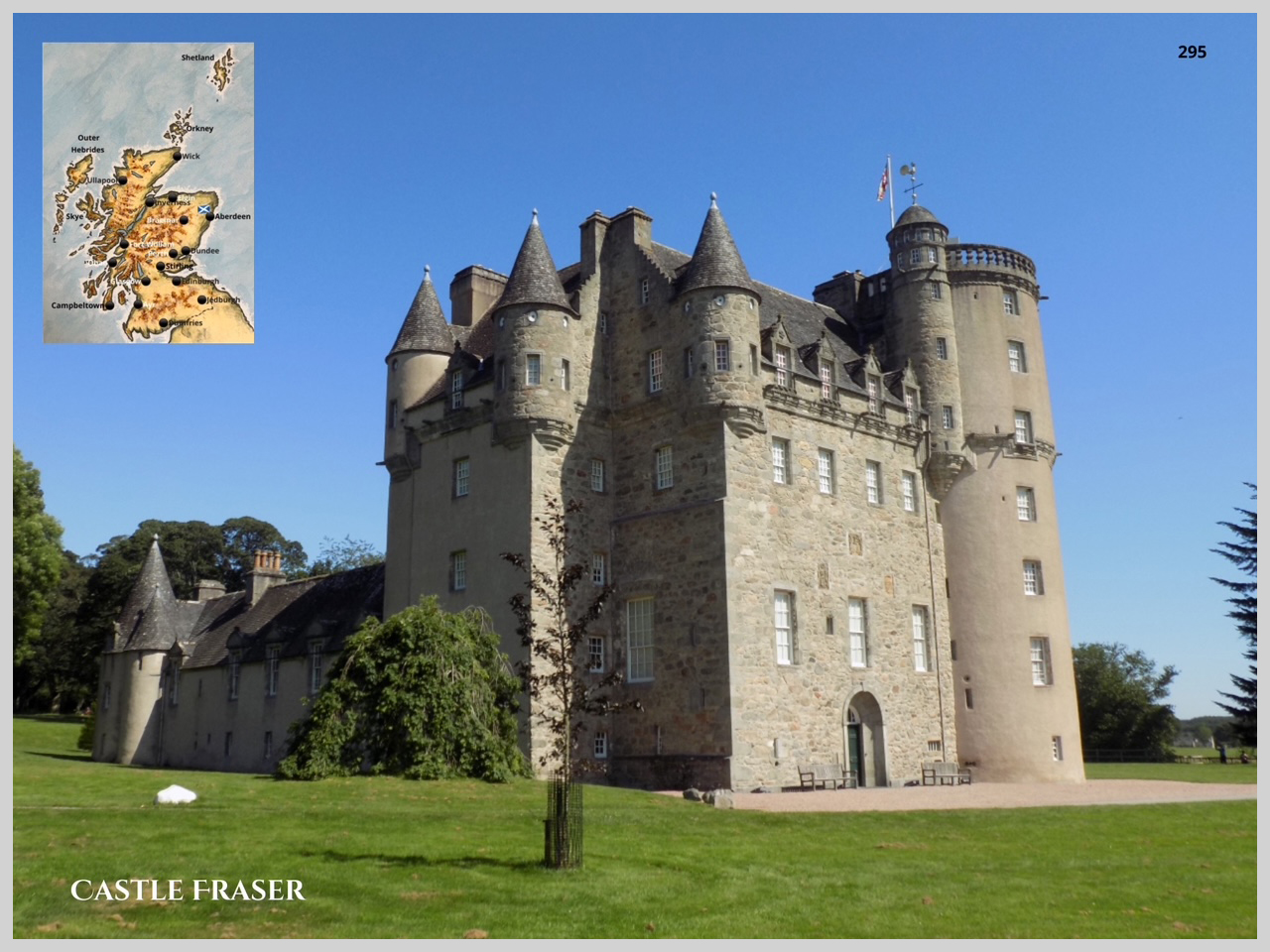
From the 14th to 17th centuries, tower houses dominated, built by lairds for status and security. These Z-plan or L-plan keeps featured corbelled turrets, bartizans and yett gates. Fyvie Castle evolved over 600 years, its Preston Tower from c.1400 and Leith Tower from 1890 showcasing layered additions.[3]
Cawdor Castle's 1454 tower by William Calder, 6th Thane, predates Shakespeare's fictional link. Lochranza Castle, a late-13th century rectangular keep enlarged in the 16th, served James VI's troops and Cromwell's forces.[3] Many linked to powerful clans, embodying feudal loyalty and rivalry.
Gothic Revival and Victorian Baronial Splendour
By the 1600s, defence yielded to comfort; lairds migrated to manor houses, often adjoining castles. The late 18th-19th century Gothic Revival resurrected castle forms for prestige. Inveraray Castle (from 1746, with William Adam's input) integrated turrets early.[1]
Scots Baronial Triumph
Scottish Baronial style revived historical motifs: crow-step gables, pepper-pot turrets. Balmoral Castle's 1855-58 rebuild as a baronial palace by Queen Victoria cemented its vogue. Floors Castle gained Playfair's turrets and cupolas in 1838. Dall House (1855) and Helen's Tower (1848) featured corbelled towers.[1][6]
This era blended nostalgia with modernity, transforming ruins into romantic seats.
FAQs on Scottish Castle Architecture
What era built the most castles in Scotland?
The 13th century, dubbed the 'golden age', saw prolific construction of curtain-walled castles, ringworks and early tower houses, alongside royal fortresses.[2]
What is the oldest castle in Scotland?
Castle Sween, with 12th-century origins, is among the earliest stone castles, though wooden precursors under David I date to the mid-1100s. St Margaret's Chapel at Edinburgh Castle survives from the 12th century.[1][2]
How did castle design change over time in Scotland?
From 12th-century motte-and-bailey woodens to 13th-century stone curtains and towers; 15th-century artillery bastions; 16th-century Renaissance palaces; and 19th-century Gothic Baronial revivals for prestige over defence.[1][2]
What is a Norman motte and bailey castle?
A motte-and-bailey features a steep earthen mound (motte) with a wooden keep, adjacent bailey yard, ditch and palisade—quick to build for Norman control.[2]
When did Scotland stop building castles?
Defensive castle-building waned by the early 1600s as manor houses prioritised comfort; new 'castles' continued into the 19th century as stylistic revivals.[2]
Delve deeper into Scotland's fortified legacy at ScottishShields.com. Our castles directory and clans histories offer gateways to your own heritage quest—discover the towers that whisper of kings, warriors and enduring Scottish spirit.