The Highland targe Scotland history reveals a vital piece of martial heritage, where this compact round shield equipped fierce warriors against foes in close-quarters combat. From the rugged glens of the Highlands to the blood-soaked fields of Culloden, the targe stood as both protector and emblem of clan pride, embodying the unyielding spirit of Scottish defenders.
Origins and Evolution of the Highland Targe
The Highland targe traces its roots to medieval Europe, where shields known as targes appeared among foot soldiers from the 13th century. Scottish warriors adapted these influences from Norse and Celtic designs, refining the form by the 14th century into the strapped round shield recognised today[2][1]. By the late 16th century, it had become the primary defence for Highlanders, persisting until the Battle of Culloden in 1746[2].
Early Influences and Design Shifts
Initially, targes served in duels and battles across Europe, but Highlanders modified them for clan warfare's demands—swift, personal skirmishes rather than rigid formations. The Gaelic term targaid underscores its strapped nature, distinguishing it from larger shields like those of Vikings[2][3]. This evolution suited the Highland charge, pairing the targe with broadswords and dirks for aggressive advances[4].
Construction: Craftsmanship Behind the Shield
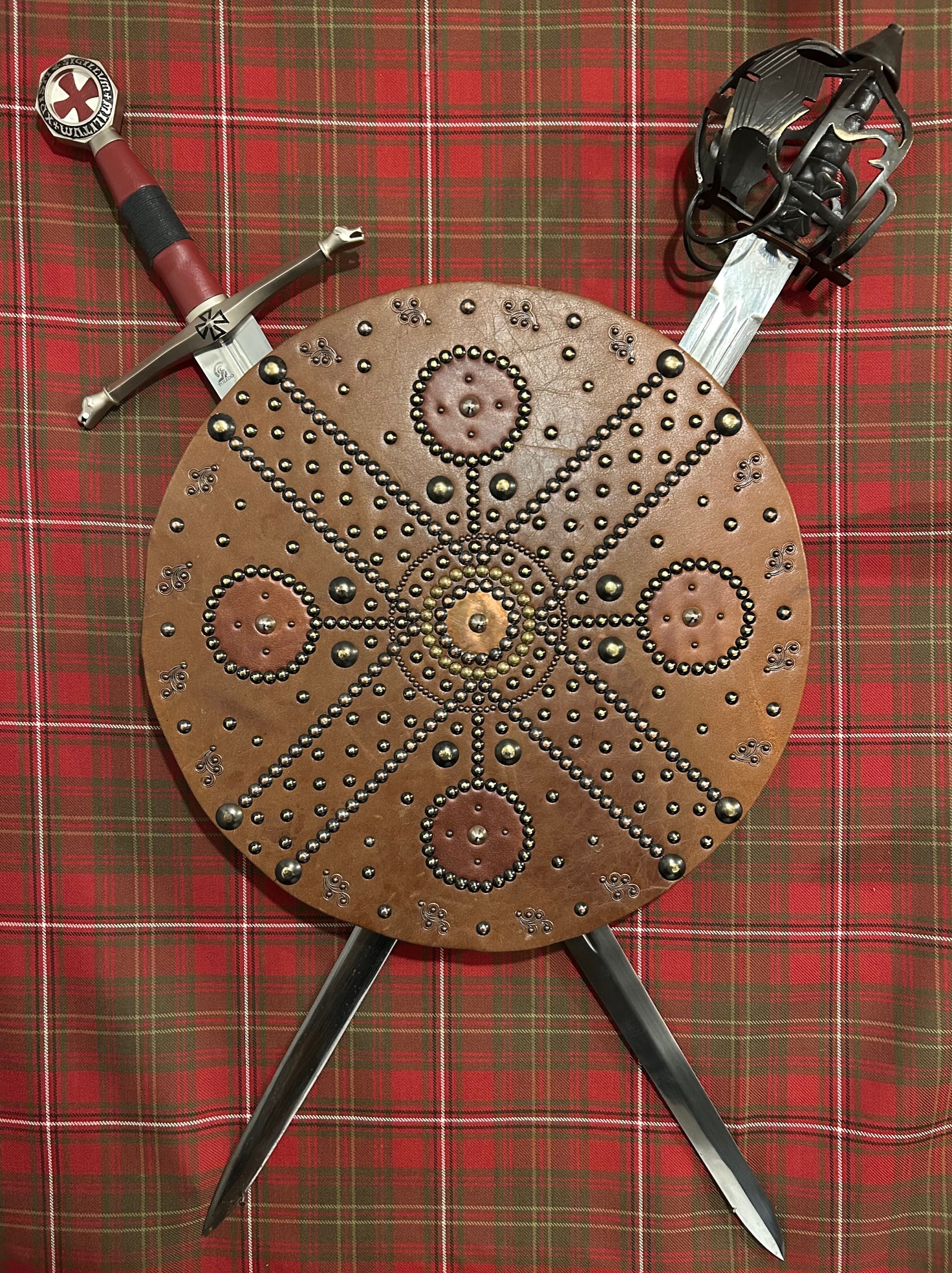
A typical Highland targe measured about 50-60 cm in diameter, crafted from layered plywood—thin wooden boards glued with grains at right angles for strength, fixed with wooden pegs[4]. The front received tough cowhide, often embossed with Celtic patterns, secured by brass or silver nails that doubled as decoration and reinforcement[2][1].
Key Components and Variations
- Central Boss: A brass boss in the centre protected the hand grip; some featured spikes for offence[4].
- Straps (Enarmes): One adjustable buckle strap for the forearm, another fixed for the hand, allowing dynamic movement[1].
- Decorative Studs: Brass plates and nails formed intricate motifs, with finer examples using silver for chieftains[2].
Shieldwrights like William Lindsay of Perth produced hundreds for Jacobite forces in 1745-46, varying quality between officers' ornate pieces and standard warrior shields[5]. Surviving targes, often richly decorated, belonged to high-status owners spared from destruction[3].
The Targe in Highland Warfare
Highlanders wielded the targe in the left arm for close combat, deflecting slashes from swords, axes, and arrows while lunging with broadswords or dirks held in the same hand[2][1]. Its concave shape and lightness—around 3-5 kg—enabled rapid parries and charges, ideal for the fluid, individualistic Highland tactics[6].
Notable Engagements
In 1596, Clan Grant chief John Grant mustered 500 men, 40 armed in Highland fashion with targes, bows, helmets, and swords[2][1]. At Bannockburn in 1314, early targe-like shields aided Robert the Bruce's victory, though the classic form shone in Jacobite risings[1]. Front-rank warriors with broadswords and targes led charges, absorbing initial fire before melee[6]. Clans like the Campbells, Macdonalds, and Frasers emblazoned their crests on targes, turning defence into declaration[1].
Symbolism and Clan Identity
Beyond utility, the targe proclaimed heritage through embossed Celtic knots, clan badges, and Christian symbols like crosses, fusing artistry with armour[1][2]. Brass studs and silver nails signalled rank, making it a status symbol as much as a weapon. In battle, it rallied kin under shared emblems, fostering unbreakable loyalty amid chaos.
From Battlefield to Heirloom
Officers' targes, captured at Culloden, now reside in places like the Royal Armouries, their intricate designs preserved as trophies[5]. These artefacts link modern enthusiasts to ancestors who charged with dirk blades protruding below the rim, ready to strike[2].
Decline and Legacy Post-Culloden
The Jacobite defeat at Culloden in 1746 marked the targe's end as a weapon. The Disarming Act banned it alongside broadswords and dirks, mandating destruction or repurposing to disarm the Highlands[2][3]. Many vanished, but ornate survivors hint at their makers' skill and owners' prominence[1].
Modern Revival
Today, replicas crafted from hardwood and leather evoke this legacy, used in reenactments to demonstrate the Highland charge's ferocity[7][8]. Thicker 17th-18th century versions even aimed to deflect musket balls, though bayonets proved deadlier[6].
Frequently Asked Questions
What is a Highland targe used for?
The Highland targe served as a defensive shield in close combat, protecting against swords, axes, arrows, and occasionally musket balls. Highlanders paired it with broadswords or dirks, using its straps for agile blocking and counterattacks during rapid charges[1][2][4].
When did Highlanders stop using targes?
Highlanders ceased battlefield use after the Battle of Culloden in 1746, when the Disarming Act of 1746 outlawed them to suppress Jacobite resistance. Many were destroyed, ending centuries of tradition[2][3].
How was a Scottish targe made?
It began with plywood layers for strength, covered in cowhide embossed with Celtic designs, nailed with brass or silver studs. A central brass boss and enarmes completed the strapped design, with variations for officers featuring finer metals[2][4][5].
Why did Highlanders carry targes into battle?
Targes suited Highland warfare's emphasis on speed and melee, offering lightweight protection for front-rank charges. They deflected blows while allowing dirk or sword strikes, symbolising clan identity through decorations[1][6].
What happened to targes after the Battle of Culloden?
The Disarming Act banned and led to the destruction of most targes, with survivors—often ornate officers' pieces—repurposed or captured as trophies, now in museums like the Royal Armouries[2][3][5].
Delve deeper into Scotland's warrior past at ScottishShields.com/shop, where authentic replicas and clan-inspired items bring the Highland targe's legacy to life. Explore your heritage today and claim a piece of this enduring story.