Clan Gordon stands as one of Scotland's most formidable and historically significant clans, wielding power across the northeast Highlands for nearly nine centuries. From their Norman-French origins in the Scottish Borders to their dominance as the undisputed magnates of Aberdeenshire, the Gordons shaped the political, military, and cultural landscape of medieval and early modern Scotland. Their story is one of strategic ambition, fierce loyalty, and remarkable survival—a narrative that earned them the legendary title 'Cock of the North' and secured their place among Scotland's greatest clans.
Origins and Early Settlement: From the Borders to the Highlands
The Gordon family traces its lineage to Norman-French ancestry, arriving in Britain with William the Conqueror's invasion of 1066. However, their documented Scottish history begins in the 12th century when King David I welcomed the first Gordons to Scotland. The family's founder, Richard of Gordon, was granted land in the Merse of Berwickshire around 1150, establishing a territorial foothold that would eventually expand northward into Aberdeenshire.
The name Gordon itself is territorial in origin, likely derived from Welsh words meaning 'spacious fort' or the Gaelic 'Gordin,' meaning 'on the hill.' Early legend credits the family's initial prestige to a brave knight who saved his community by slaying a monstrous wild boar—a tale that speaks to the martial prowess that would define the clan for generations to come. The Gordons initially established their home in Kelso under the watchful eye of the Earl of Dunbar, but their ambitions lay further north.
The Wars of Scottish Independence: A Pivotal Shift in Fortune
The Wars of Scottish Independence proved transformative for Clan Gordon, fundamentally reshaping their territorial power and political influence. Sir Adam Gordon initially navigated the treacherous politics of the era by paying homage to Edward I of England, but he demonstrated the shrewd political acumen that would characterise the clan's survival strategy. Recognising the ascendancy of Robert the Bruce, Adam renounced his acceptance of English claims and became a staunch supporter of the Scottish king.
This crucial shift in loyalty proved invaluable. Sir Adam Gordon served as an ambassador to the Pope on behalf of Bruce, a role of immense diplomatic significance. In recognition of this service and his military contributions, Bruce rewarded him with the confiscated lands of Strathbogie in Aberdeenshire—a grant that fundamentally repositioned the Gordons from Border lords to Highland magnates. This territorial acquisition marked the beginning of their ascendancy in the northeast.
However, the path to dominance was not without cost. Sir Adam Gordon was killed leading the clan at the Battle of Halidon Hill in 1333, yet his son Sir Alexander Gordon escaped and became the first Gordon to be designated 'of Huntly,' establishing the territorial identity that would define the clan's power base for centuries. Later, Chief Sir John Gordon fell at the Battle of Otterburn in 1388, and Chief Sir Adam Gordon was killed at the Battle of Homildon Hill on 14 September 1402—yet each sacrifice seemed only to strengthen the clan's resolve and reputation.
The Rise to Supremacy: Defeating the Douglases and Establishing Dominance
The 15th century witnessed Clan Gordon's emergence as the undisputed power in the northeast. The clan became embroiled in the deadly feud between the Scottish Crown and the mighty Clan Douglas, a conflict that would determine the balance of power in Scotland. The Gordons chose wisely, supporting the king against the ambitious Douglas confederacy.
When the Earl of Moray, allied with the Douglases, attempted to crush Gordon power by devastating their lands and burning Huntly Castle, the clan responded with characteristic determination. They rebuilt their fortress and returned to defeat their enemies decisively. In 1454, when the Douglases broke out in rebellion once more, they found themselves caught between the king in the south and the Gordons in the north—a position that proved catastrophic. The Douglases were soundly defeated, effectively ending their confederacy with the Rosses and Crawfords.
This victory cemented Gordon supremacy in the northeast and earned their chiefs the title 'Cock of the North'—a designation that reflected their near-autocratic control over the region and their pivotal role in national Scottish politics. For two centuries from the mid-15th century onwards, Clan Gordon and Clan Campbell controlled the northeast and west of Scotland respectively, straddling the crucial divide between the Highlands and Lowlands as the great magnates of their age.
Religious Conflict and the Forbes Feud: Two Centuries of Bloodshed
The Protestant Reformation of the 16th century introduced a new dimension to Highland politics, and Clan Gordon found itself at the centre of religious conflict. The Catholic Gordons clashed repeatedly with Protestant clans, most notably Clan Forbes, in a feud that would span two centuries and leave deep scars across Aberdeenshire.
The Escalation of Violence
The feud was ignited partly by religious differences and partly by the murder of Seton of Meldrum, a close ally of the Earl of Huntly. What followed was a cycle of brutal retaliation that shocked even the hardened sensibilities of Highland warfare. In 1571, twenty Gordons were murdered at a banquet held at Forbes's Druminnor Castle—a treacherous act that violated the sacred laws of hospitality. The Gordons responded with devastating force, culminating in the massacre of twenty-seven members of the Forbes household at Corgarff Castle.
The violence escalated through the Battle of Tillieangus and the Battle of Craibstone, with Druminnor Castle—the seat of the Forbes chief—being plundered in retaliation. The feud became so destructive that it required two separate Acts of Parliament to force both clans to lay down their arms. Even then, the rivalry persisted in the hearts of clansmen, a testament to the depth of the animosity that religious and territorial disputes had created.
Military Victories and Royal Favour
Despite their internal conflicts, the Gordons continued to demonstrate military prowess on the national stage. In 1513, during the Anglo-Scottish Wars, Clan Gordon fought at the Battle of Flodden under the command of Alexander Gordon, 3rd Earl of Huntly. Later, George Gordon, 4th Earl of Huntly defeated an English army at the Battle of Haddon Rig in 1542, earning recognition as a formidable military commander.
In 1594, when Archibald Campbell, 7th Earl of Argyll was granted a Royal Commission against George Gordon, 6th Earl of Huntly, the Gordon chief demonstrated his continued military superiority by defeating Campbell at the Battle of Glenlivet—a victory that underscored the clan's dominance in the northeast and their ability to resist even royal pressure when their interests were at stake.
The Civil Wars and Jacobite Era: Survival Through Divided Loyalties
The 17th century brought new challenges as Scotland was torn by civil war and religious upheaval. During the English Civil War and the subsequent conflict between Royalists and Covenanters, Clan Gordon found itself divided. The clan fought at the Battle of Alford in 1645, where they achieved victory under the command of George Gordon, 2nd Marquess of Huntly, though the Marquess's eldest son George fell in the battle.
The Jacobite Risings of the 18th century presented a particularly delicate situation for the clan. Rather than committing entirely to either the Hanoverian government or the Jacobite cause, the Gordons employed a cunning strategy of divided loyalties to protect their estates and influence. In 1745, whilst the 3rd Duke of Gordon supported the British-Hanoverian government, his brother Lord Lewis Gordon raised two regiments for the Jacobite cause and fought fiercely at the Battle of Culloden. This pragmatic approach allowed the clan to maintain power and influence regardless of which side ultimately prevailed—a strategy that ensured their survival and continued prominence into the modern era.
Frequently Asked Questions
Why is Clan Gordon called the Cock of the North?
Clan Gordon earned the title 'Cock of the North' following their decisive victory over Clan Douglas in 1454. The designation reflects their near-autocratic control over the northeast Highlands and their pivotal role in Scottish national politics. The title was bestowed upon Alexander Gordon after he defeated the Douglas confederacy, and it became a hereditary honour passed from clan chief to clan chief, symbolising their supremacy in the region and their dominance over rival clans.
What castle is the seat of Clan Gordon?
Huntly Castle serves as the principal seat of Clan Gordon and has been the centre of their power in Aberdeenshire for centuries. The castle was burned by the Earl of Moray during the Douglas conflicts but was subsequently rebuilt by the Gordons. It remains one of Scotland's most impressive castles and a testament to the clan's enduring influence and resources.
Were the Gordons Jacobites?
The Gordons' relationship with Jacobitism was complex and pragmatic rather than ideologically committed. During the 1745 Rising, the clan employed a strategy of divided loyalties: whilst the 3rd Duke of Gordon supported the British-Hanoverian government, his brother Lord Lewis Gordon raised two regiments for the Jacobite cause and fought at Culloden. This approach allowed the clan to protect their estates and maintain influence regardless of the outcome, demonstrating the political sophistication that had ensured their survival for centuries.
What is the Gordon clan tartan?
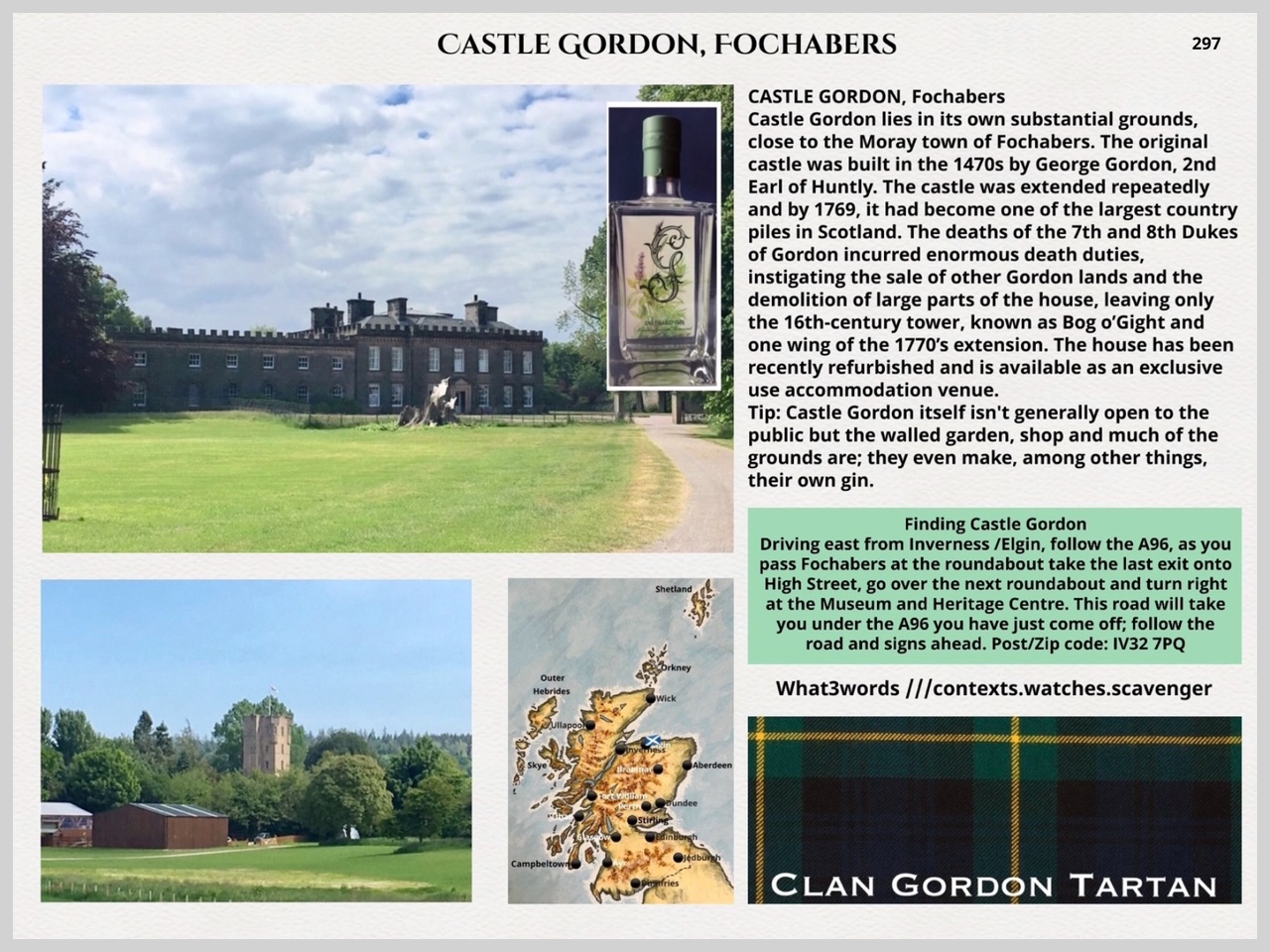
Clan Gordon has several recognised tartans, with the most prominent being the Gordon tartan, which features a distinctive pattern of blue, green, and red. The tartan reflects the clan's Highland heritage and is worn by clan members and descendants at formal occasions, gatherings, and cultural events. The specific design has evolved over time, but it remains one of Scotland's most recognisable tartans.
Which earls and dukes were from Clan Gordon?
Clan Gordon produced numerous earls and dukes who shaped Scottish history. Notable figures include Alexander Gordon, 3rd Earl of Huntly; George Gordon, 4th Earl of Huntly; George Gordon, 6th Earl of Huntly; and George Gordon, 2nd Marquess of Huntly. The clan also produced the 3rd Duke of Gordon in the 18th century. These titles reflect the clan's sustained prominence and their integration into Scotland's highest nobility over nearly five centuries.
Legacy and Enduring Influence
Clan Gordon's history is a sweeping chronicle of power, survival, and adaptation that bridges the gap between the Scottish Borders and the rugged Highlands. From their Norman-French origins to their emergence as the 'Cock of the North,' the Gordons demonstrated remarkable political acumen, military prowess, and strategic flexibility. Their ability to navigate the treacherous waters of Scottish politics—from the Wars of Independence through the Reformation and into the Jacobite era—ensured not merely their survival but their continued dominance.
The clan's story encompasses triumph and tragedy, loyalty and pragmatism, religious conviction and political necessity. It is a narrative that reveals much about the nature of Highland power, the complexities of Scottish history, and the qualities that allowed certain families to rise above their peers and shape the destiny of a nation. To explore more about Clan Gordon and discover the rich tapestry of Scottish clan history, visit ScottishShields.com, where the stories of Scotland's greatest families await your discovery.