Scottish baronial architecture stands as a testament to Scotland's enduring fascination with its medieval past, blending the rugged grandeur of tower houses with the ornate flourishes of the Gothic Revival. This 19th-century style, evocative of fortified laird's residences, transformed country estates and urban tenements into dramatic silhouettes of turrets, crow-stepped gables, and battlemented roofs, capturing the imagination of Victorians who sought to romanticise their heritage.
Origins in the Scottish Renaissance
The roots of Scottish baronial architecture trace back to the 16th and 17th centuries, when Scotland's elite barons commissioned residences that fused defensive castle forms with Renaissance elegance. High-rising medieval Gothic castles, once practical against siege, persisted in style long after gunpowder rendered them obsolete, symbolising chivalry and noble status. Influences from French chateaux and Flemish architecture introduced larger windows with straight lintels or rounded bows, often without mullions, while retaining tall roofs, towers, and turrets.
Key Predecessors and Early Features
Structures like Claypotts Castle near Dundee exemplify early prototypes, with round towers corbelled out into square garret chambers—a hallmark that would define the revival. Crow-stepped gables, roll-moulded corbels supporting conical-roofed turrets, and machicolations added defensive flair to these high-status homes. By the late 17th century, the style waned, but its memory lingered in the collective psyche of Scotland's landed gentry.
Explore more about these foundational castles that shaped Scotland's architectural legacy.
The Gothic Revival and the Spark of Romanticism
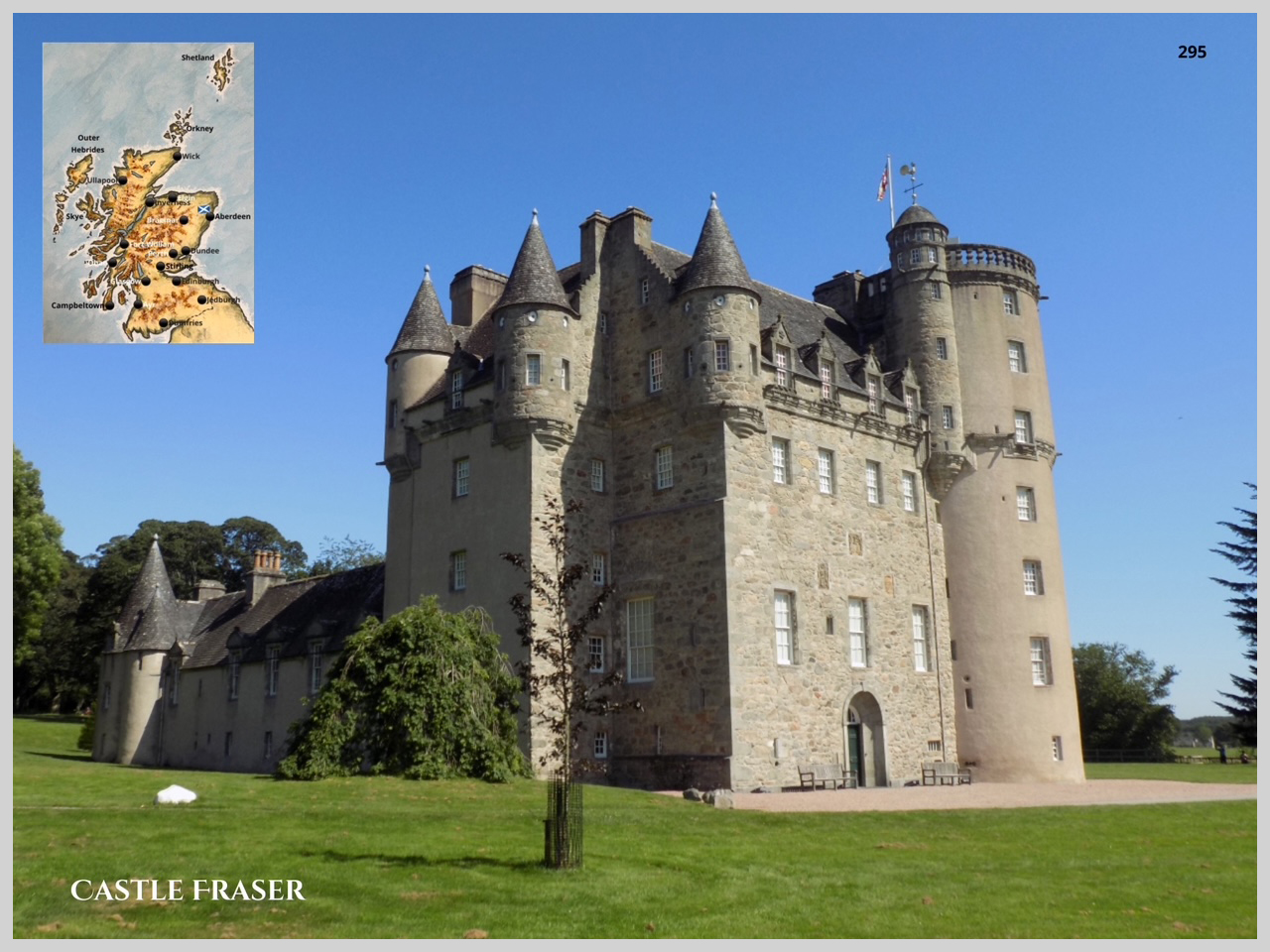
The 19th-century Gothic Revival provided fertile ground for Scottish baronial architecture's resurgence, reacting against the rigid symmetry of neoclassical designs epitomised in Edinburgh's New Town. This movement, coinciding with Romanticism and a burgeoning Scottish national identity, celebrated medieval forms through intricate stonework and asymmetry. In Scotland, it evolved distinctly as 'Scots baronial', drawing on tower houses rather than English Gothic cathedrals.
From Palladian Adaptations to Full Revival
Early harbingers appeared in the 18th century, such as Inveraray Castle (from 1746), where William Adam incorporated turrets into a Palladian framework. His sons, Robert and James Adam, advanced this at Culzean Castle, remodelled from 1777, blending baronial externals with comfortable interiors. By the early 1800s, the style gained momentum, setting the stage for its Victorian codification.
Walter Scott and Abbotsford: The Pivotal Influence
Sir Walter Scott, the novelist whose Waverley novels ignited Romantic interest in Scotland's history, became the unwitting pioneer of the Scottish baronial revival through Abbotsford House. Rebuilt from 1816 near Melrose, Abbotsford rejected English Gothic and classical symmetry for an asymmetrical massing of tower houses, medieval fragments, and crow-stepped gables. Scott incorporated 'spolia'—salvaged ancient stones—to evoke authentic antiquity, creating a home that doubled as a shrine to his vision of a romantic, unionist Scotland.
A Model for the Nation
Abbotsford's battlemented gateways, spiral stairs, pointed turrets, and machicolations became blueprints for imitators. It expressed Scott's politics: celebrating Scotland's past within Britain's imperial framework. This residence propelled the style's popularity, influencing architects and lairds eager to assert their heritage.
Victorian Masters: Burn, Bryce, and Royal Patronage
William Burn and David Bryce professionalised Scottish baronial architecture, codifying its features into a versatile idiom for country houses, public buildings, and urban developments. Burn, inspired by Scott, designed over 600 commissions, while Bryce refined the style with precision. Their work dominated mid-19th-century Scotland, from Aberdeen Grammar School to Edinburgh's Cockburn Street, built wholly in baronial form.
Balmoral Castle as Royal Endorsement
Queen Victoria and Prince Albert's rebuilding of Balmoral Castle from 1855 cemented the style's prestige. Transformed into a baronial palace, it featured elaborate rooflines, conical turrets, and battlements, serving as a royal Highland retreat. Though grander and lacking Scott's spolia, Balmoral echoed Abbotsford's symbolism of tradition and loyalty, confirming baronial architecture's status as a national emblem.
Discover the intricacies of Craigievar Castle, another Bryce masterpiece exemplifying the style's pink harled walls and fairytale towers.
Defining Characteristics of Scottish Baronial Buildings
Scottish baronial architecture is instantly recognisable by its dramatic, castle-like profiles. Buildings employ stone—ashlar or rubble masonry—with asymmetrical plans that defy neoclassical balance. Elaborate rooflines dominate, adorned with conical 'witches' hat' roofs on tourelles and bartizans (projecting corner turrets), crow-stepped gables, and crenellated parapets with machicolations.
Ornamentation and Practical Flourishes
Round towers often corbel into square tops, while bay windows boast individual pinnacled roofs. Porches and porticos receive castle treatments, sometimes with imitation portcullises flanked by heraldic beasts. Large plate-glass windows, steep copper roofs, and lavish details like dormers, finials, and iron cresting add Victorian opulence. In urban settings, these elements scaled down for tenements, creating illusory grandeur.
- Asymmetry: Jagged skylines from varied roof heights and projecting towers.
- Turrets and Bartizans: Conical roofs on corbelled supports.
- Crow-Steps: Stepped gables evoking older Scots traditions.
- Battlements: Defensive crenellations for visual drama.
- Stonework: Robust masonry underscoring permanence.
Legacy Across the Empire and Beyond
Scottish baronial architecture extended far beyond Scotland, adorning public buildings, follies, and residences throughout the British Empire as a symbol of Scottish identity. Charles Rennie Mackintosh drew core influences for his Modern Style, while the Scottish National War Memorial (1927) in Edinburgh Castle marked its last major expression. Today, it persists in restorations and new interpretations, capturing Scotland's essence in stone.
Urban and Public Applications
In Edinburgh, the style proliferated during mid-19th-century expansions, with features like bartizans on former schools now whisky attractions. Its fusion of Gothic Revival and tower-house forms offered a patriotic alternative to imported styles, enduring in places like Fettes College and the Scott Monument.
FAQs
What is Scottish baronial architecture?
Scottish baronial architecture is a 19th-century Gothic Revival style that revives medieval and Renaissance forms from Scottish castles and tower houses. Characterised by asymmetrical plans, turrets with conical roofs, crow-stepped gables, and battlemented parapets, it evokes fortified baronial residences while incorporating Victorian comforts.
Why did the baronial style become popular in Scotland?
The style surged in popularity amid 19th-century Romanticism, nationalism, and reaction against neoclassical symmetry. Walter Scott's Abbotsford provided a model, while royal endorsement via Balmoral and architects like Burn and Bryce codified it for country houses and urban developments, aligning with Scotland's quest for identity within the Union.
Is Balmoral Castle Scottish baronial style?
Yes, Balmoral Castle was rebuilt in Scottish baronial style from 1855 by Queen Victoria and Prince Albert. Its turrets, elaborate rooflines, and battlements exemplify the form, though on a grander scale, confirming the style's royal prestige.
Who pioneered the Scottish baronial revival?
Sir Walter Scott pioneered the revival through Abbotsford House (from 1816), which popularised features like turrets and crow-steps. Architects William Burn and David Bryce then systematised and disseminated the style across Scotland and the Empire.
What are the key features of Scottish baronial buildings?
Key features include asymmetrical massing, conical-roofed turrets and bartizans, crow-stepped gables, machicolated battlements, corbelled towers, large bay windows with pinnacles, and robust stone construction. These create castle-like silhouettes with Renaissance-influenced windows and Victorian detailing.
Delve deeper into Scotland's castle heritage at ScottishShields.com/castles, where you can explore interactive maps, clan histories, and premium heraldry. For unique gifts celebrating this architectural legacy, visit our shop featuring bespoke Scottish shields and prints.